
The Quiet Way Mismatched Business Info Costs You Customers
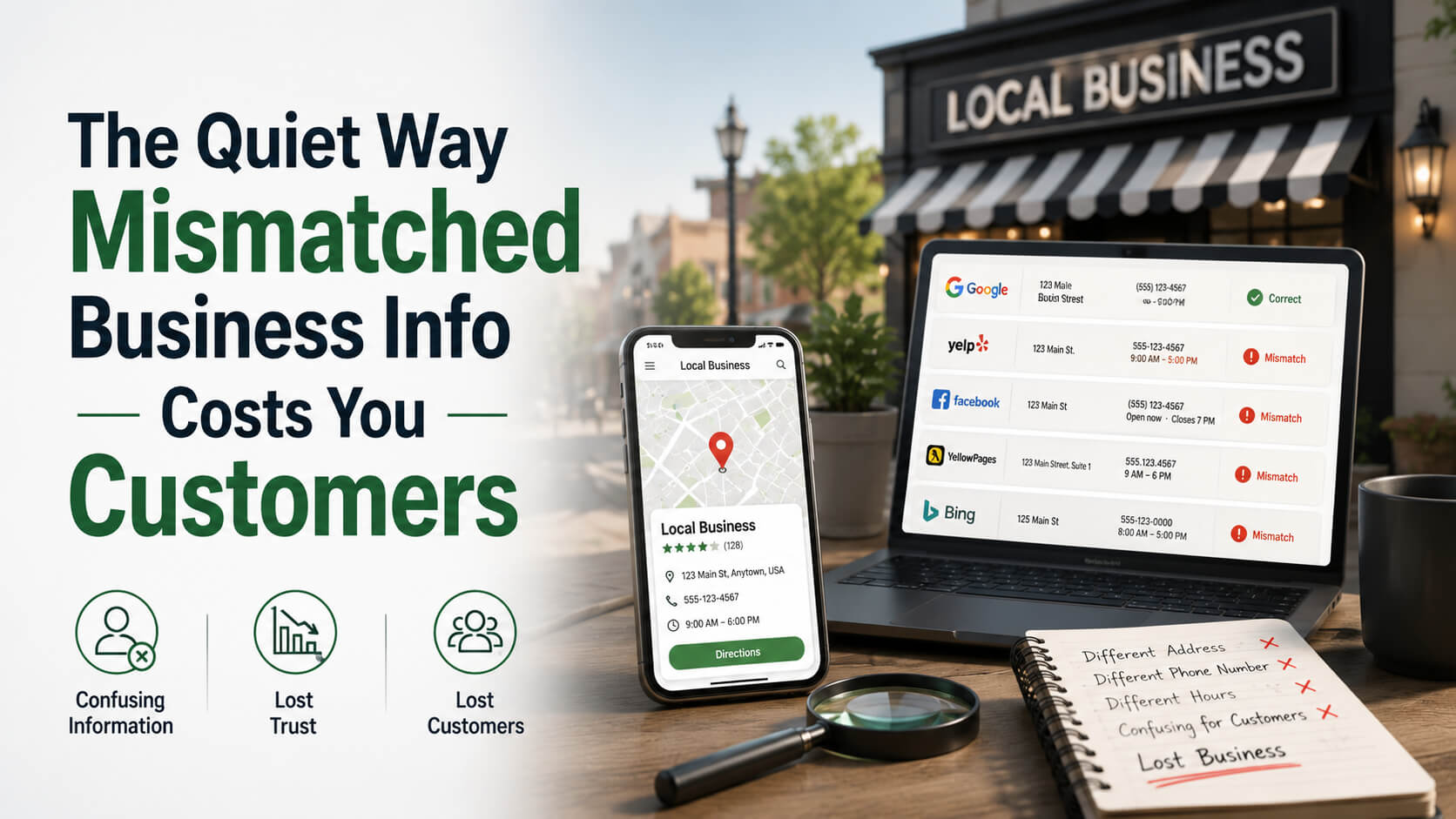
Here’s a problem almost nobody notices until it hurts them. A landscaping company lists its number as (XXX) XXX-3400 on one site, (XXX) XXX-3401 on another, and an old address on a third that hasn’t been updated since a move two years ago. Each listing looks fine on its own. Together, they send a confusing message to customers and search engines alike: which version of this business is real? That confusion is exactly what business citations are meant to prevent.
What a business citation really is
A citation is any online mention of your business name, address, and phone number, usually shortened to NAP. It shows up on directories, review platforms, chamber of commerce pages, and local guides. You don’t have to link back to your site for it to count. The mention itself acts like a reference in a job application. The more consistent, credible references you have, the more trustworthy you look to both people and the systems that recommend local businesses.
Why consistency does the heavy lifting
Imagine a hiring manager checking references and getting three slightly different phone numbers for the same person. That’s how search engines feel when your details don’t match. Inconsistent citations create doubt, and doubt is the enemy of getting recommended. When your NAP is identical everywhere, you remove that friction. Building citations on established platforms, including a well-maintained directory such as BizSpree, gives you clean, matching references that reinforce one another instead of competing.
How to clean up what you already have
Start by searching your business name and old phone numbers to see what’s floating around. You’ll likely find outdated listings you forgot existed. Correct the obvious errors first: wrong suite numbers, disconnected phone lines, a former business name. Decide on one exact format for your address, including how you abbreviate “Street” or “Suite,” and apply it everywhere. Keep a simple document with your official name, address, phone number, and hours so anyone updating a listing uses the same version. This sounds tedious because it is, but it’s the kind of unglamorous work that quietly builds credibility over time and saves you from chasing down mismatches later.
Treat citations as maintenance, not a one-time project
Businesses change. You move, add a second location, or switch phone providers. Each change means revisiting your listings. Set a reminder to review them a couple of times a year. A tidy, accurate set of citations tells customers you’re a real, stable business worth trusting, and it spares you the slow leak of missed calls that come from a wrong number sitting on a page you forgot about.
Frequently Asked Questions
Any place online that mentions your business name, address, and phone number counts, whether or not it links to your website. That includes directories, review sites, local news roundups, and community pages. The mention is what matters. A citation confirms you exist and helps customers and search tools verify your basic details.
No. A link is a nice bonus, but the core value of a citation is the consistent mention of your name, address, and phone number. Many valuable citations are simple listings with no clickable link at all. Focus first on accuracy and consistency, then treat any links you earn as extra credit rather than the goal.
Mismatched details create confusion. Customers may call a dead number, and search engines become less sure which information is correct, which can hurt how confidently you're shown in local results. It rarely causes a dramatic drop, but it quietly drags on your credibility and can cost you calls you never realize you missed.
There's no magic number. A handful of accurate, well-known citations beats dozens of sloppy ones. Quality and consistency matter far more than volume. Start with the platforms your customers actually use, get those exactly right, and add more thoughtfully over time rather than chasing a total for its own sake.
Reviewing them once or twice a year is a reasonable habit for most small businesses, plus any time something changes like a move or a new phone number. Old, incorrect listings tend to linger, so a periodic sweep catches problems before customers do and keeps your information dependable everywhere it appears.