
What Happens in the 60 Seconds a Local Customer Searches for You
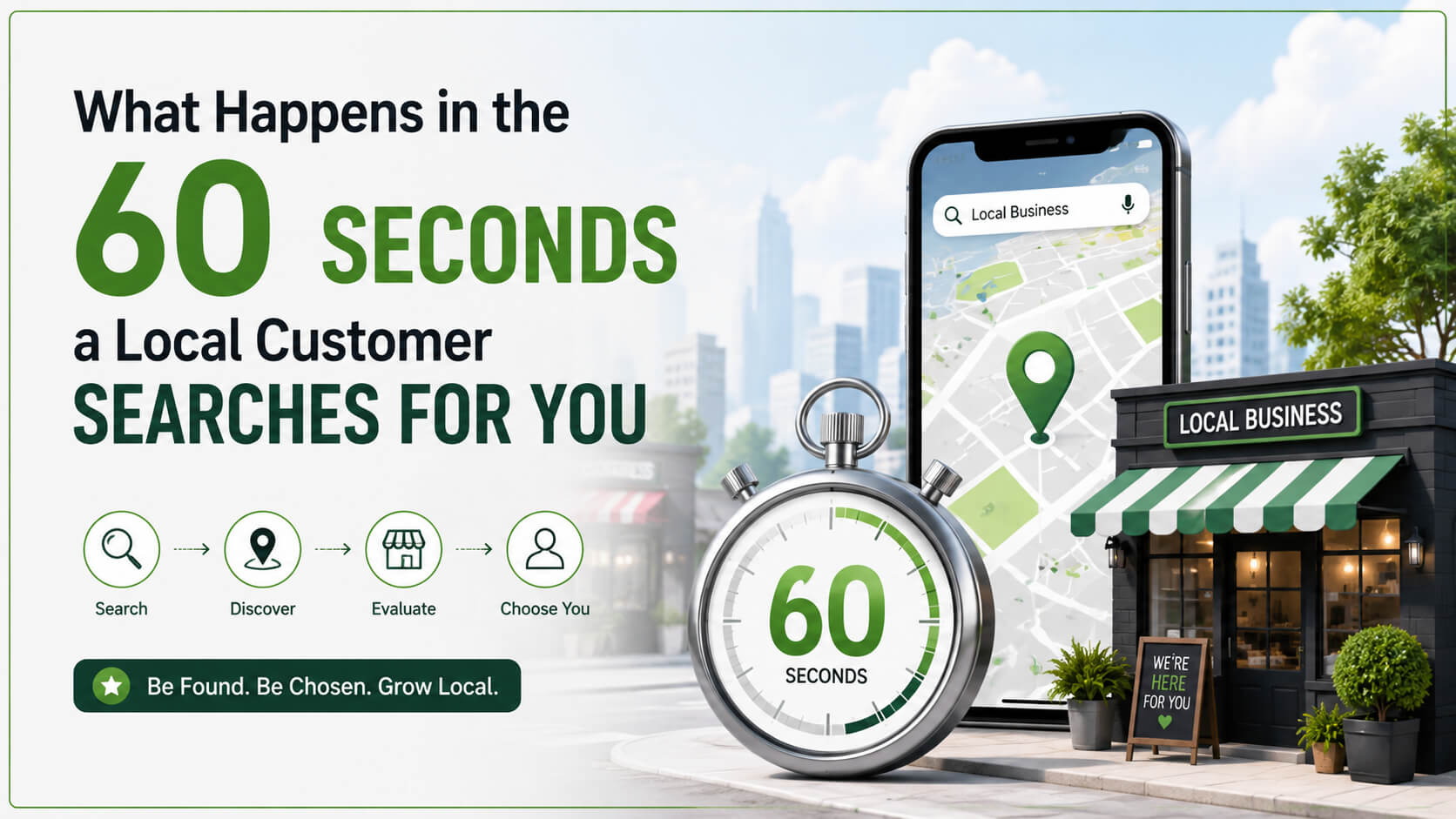
A homeowner’s water heater quits on a Sunday morning. She doesn’t ask a neighbor or dig through a drawer of old business cards. She picks up her phone, types “water heater repair near me,” and starts calling from the short list that shows up. Ten minutes later, she’s booked someone. No ad convinced her. No slow tour of a homepage happened. That’s how a huge share of local hiring decisions get made now, and most owners never watch it unfold.
The decision starts before anyone reaches your website
People rarely begin at your homepage anymore. They start with a search, scan a handful of results, and form a snap opinion based on what they see: a business name that matches what they typed, a stack of recent reviews, a phone number that’s one tap away. If your business shows up looking complete and consistent, you make that shortlist. If your listing is thin or missing, the customer never knows you exist. The frustrating part is that the better plumber, dentist, or bakery frequently loses to the one that simply shows up more clearly.
Why showing up in more places helps you show up better
Search engines want to feel confident before they recommend a business to someone standing on a street corner asking for help. That confidence comes from seeing your details repeated across trusted places online, not just on your own site. When your name, address, and phone number appear the same way on directories, review sites, and local listings, you look established and easy to verify. Getting listed on a trusted business directory like BizSpree is one straightforward way to add that kind of corroboration, especially for newer businesses that haven’t built a long track record yet.
Consistency beats cleverness
A local bakery I worked with had a beautiful website and almost no presence anywhere else. Once the owner claimed a few solid listings and kept the details identical everywhere, calls picked up within a couple of months. Nothing about the bakery changed. The muffins were the same. What changed was how findable and believable it looked to someone searching at 7 a.m. for a birthday cake. Small, consistent signals add up faster than flashy one-off efforts.
Where to focus first
If you only have an hour, spend it making sure your basic business information is accurate and identical across every place a customer might land. Fix the old phone number. Correct the suite number. Then look at where else your ideal customer searches and make sure you’re present there too. Local visibility isn’t about tricks; it’s about being easy to find, easy to trust, and easy to contact the moment someone needs you.
Frequently Asked Questions
Most start on a phone with a short, urgent phrase like "emergency electrician near me." They glance at the first few options, check reviews and distance, and often call before visiting any website. Because that decision happens fast, being visible and complete in local search matters more than having the fanciest site.
Yes. A website is where interested customers confirm you're legitimate and learn the details. But listings are usually the first touchpoint, so they do the heavy lifting of getting you noticed. Think of listings as the introduction and your website as the follow-up conversation. Both matter, and they work best together.
It varies, but many small businesses see steadier calls and inquiries within a few months of cleaning up their listings and staying consistent. There's no fixed timeline, and anyone promising overnight results should make you cautious. Steady, honest effort tends to compound quietly rather than spike overnight.
Not at all. Plenty of service businesses without a physical shop, like mobile groomers or house cleaners, rely heavily on local search. You can list the areas you serve instead of a walk-in address. The goal is being found by nearby customers, whether they come to you or you go to them.
Pick your three most important listings and make the name, address, and phone number match exactly. That single afternoon of cleanup removes confusion for both customers and search engines. Once that's solid, add a few more trusted listings over time rather than trying to do everything in one weekend.